


Sustainable Panel and Furniture Solutions for Storefront Design
How can sustainable materials be used in window display design? Studio Blai solutions from Beymen, Boyner, and Vakkorama projects.
Window display design in the retail sector is short-lived. Seasons change, collections rotate, campaigns end, and the display is dismantled. Most of the time, all the materials—MDF, painted panels, and single-use decorative elements—end up in the trash.
This cycle is both costly and generates a massive amount of waste. Large retail chains in Turkey produce hundreds of tons of window display waste annually. As sustainability policies become stricter every year, this issue can no longer be ignored.
This article covers practical ways to use sustainable materials in window display design, examples from Studio Blai's projects with brands like Beymen, Boyner, Vakkorama, and Mercado, and what retail teams need to keep in mind.
The waste problem in window display design
A window display stays up for an average of six to eight weeks. Then, it is dismantled. MDF panels, lacquered surfaces, and vinyl prints are mostly non-recyclable because they are made of multi-material structures. In practice, it is impossible to recycle painted MDF.
This situation creates three problems.
Cost. Production from scratch every season and the budget for disposal after dismantling.
ESG reporting. Waste metrics have become an indicator that must be reported annually.
Brand image. Customers are now asking what happens to a brand's window display after it is taken down, especially when the brand promotes sustainability.
How to achieve sustainable window display design
There are three main ways to make a window display sustainable.
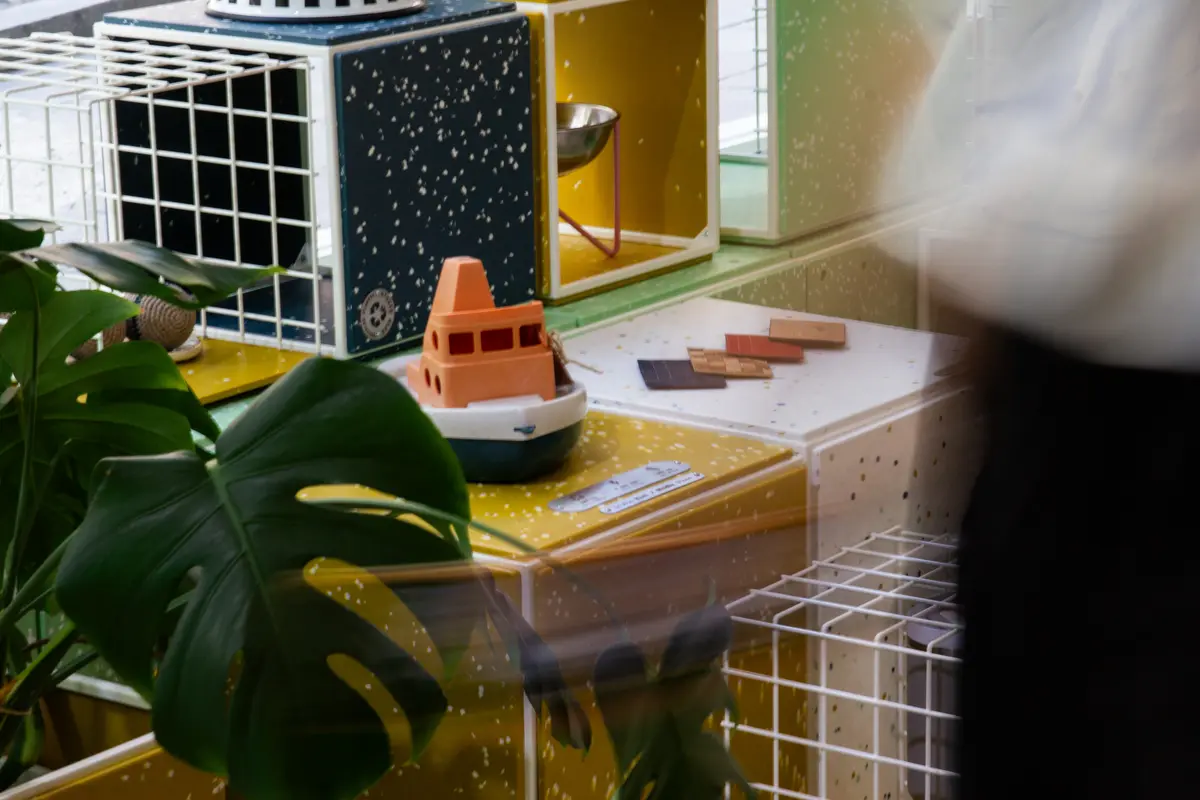
Establishing a modular system. Designing display elements in pieces to be reused from season to season. The same panels can be transformed into different displays through various compositions.
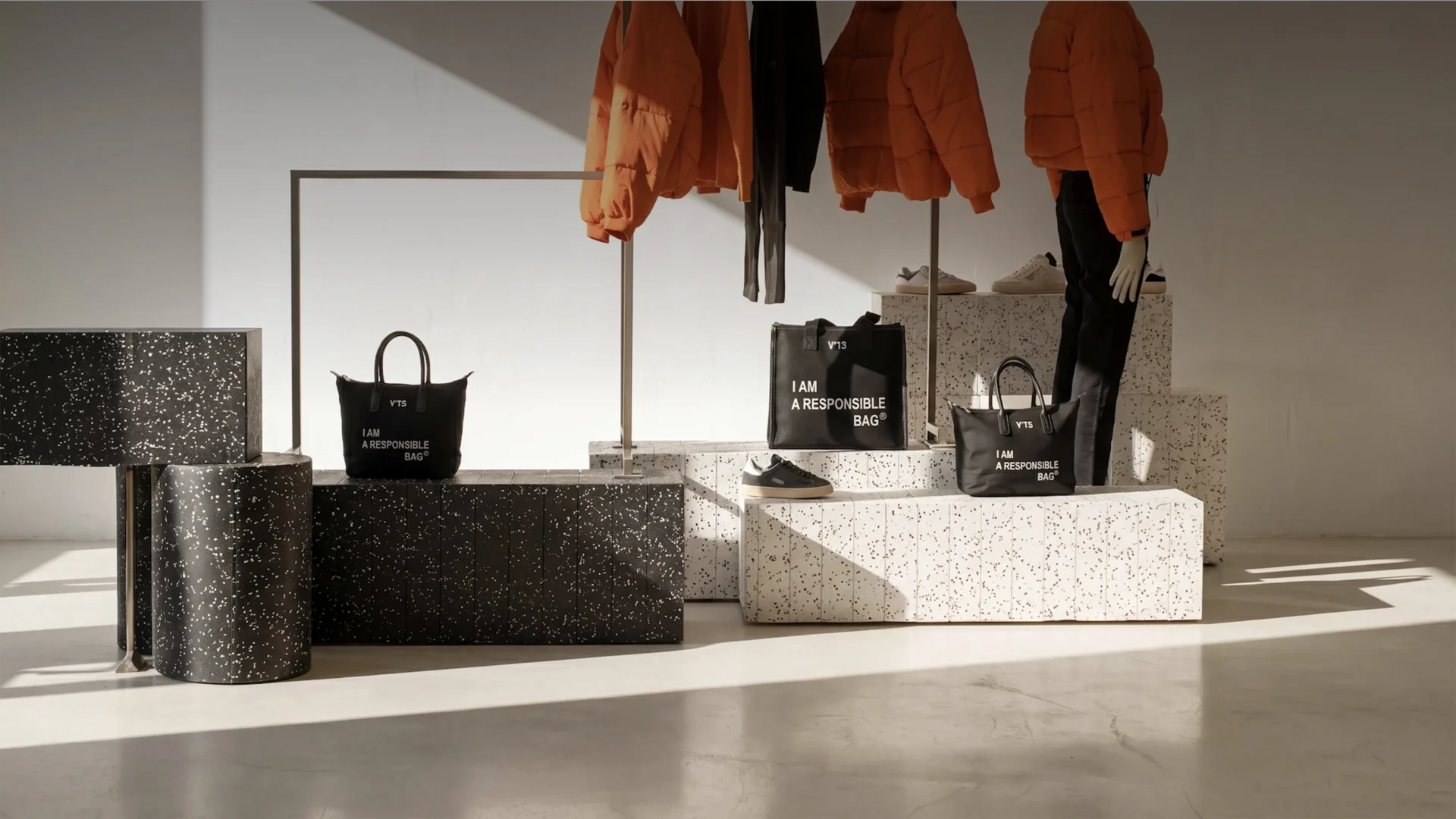
Using single-material components. Multi-material construction kills recyclability. A mono-material surface can be recycled at the end of its life without the need for separation.
Establish a buy-back agreement. If the manufacturer takes back and repurposes the material at the end of the season, waste is removed from the cycle.
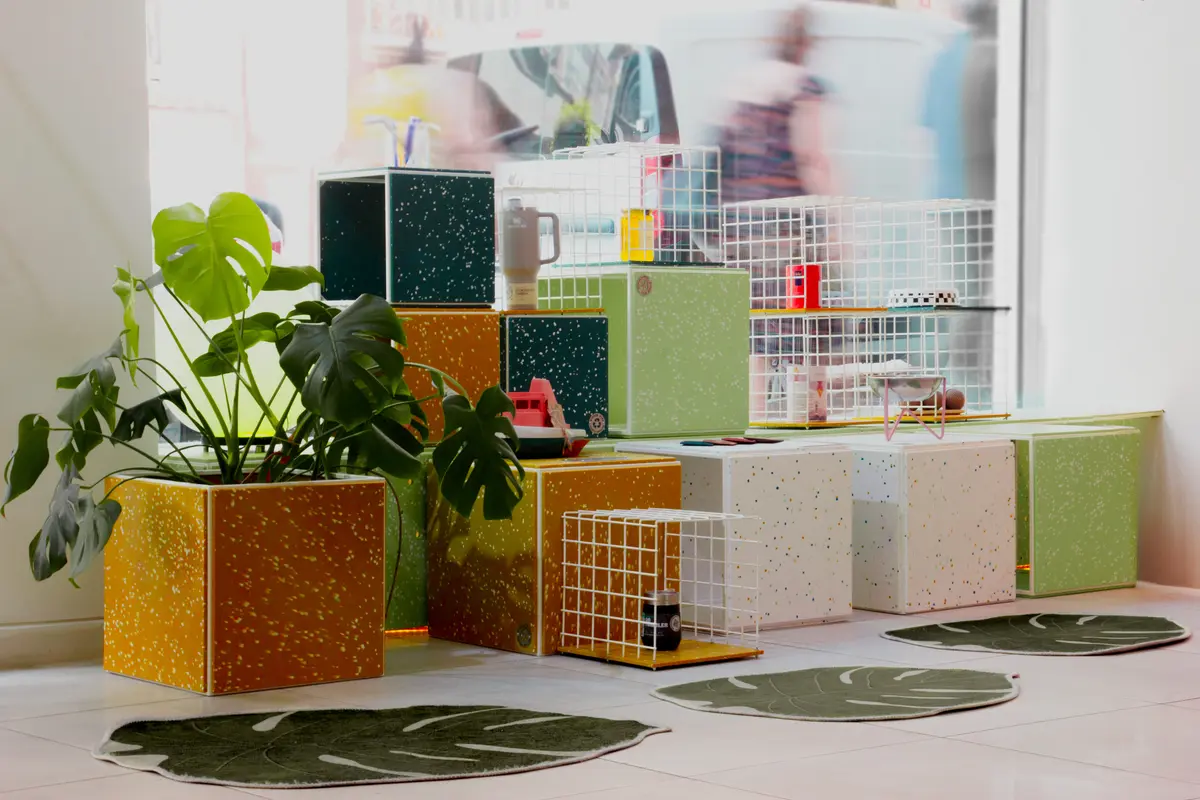
Blai Panel is a material that meets these three requirements: 100% recycled HDPE plastic, mono-material construction, glue-free production, and an active buy-back program.
Studio Blai's retail projects
To date, Studio Blai has executed window and store projects with Turkey's leading retail brands. In every project, the amount of plastic transformed was tracked as a tangible metric.
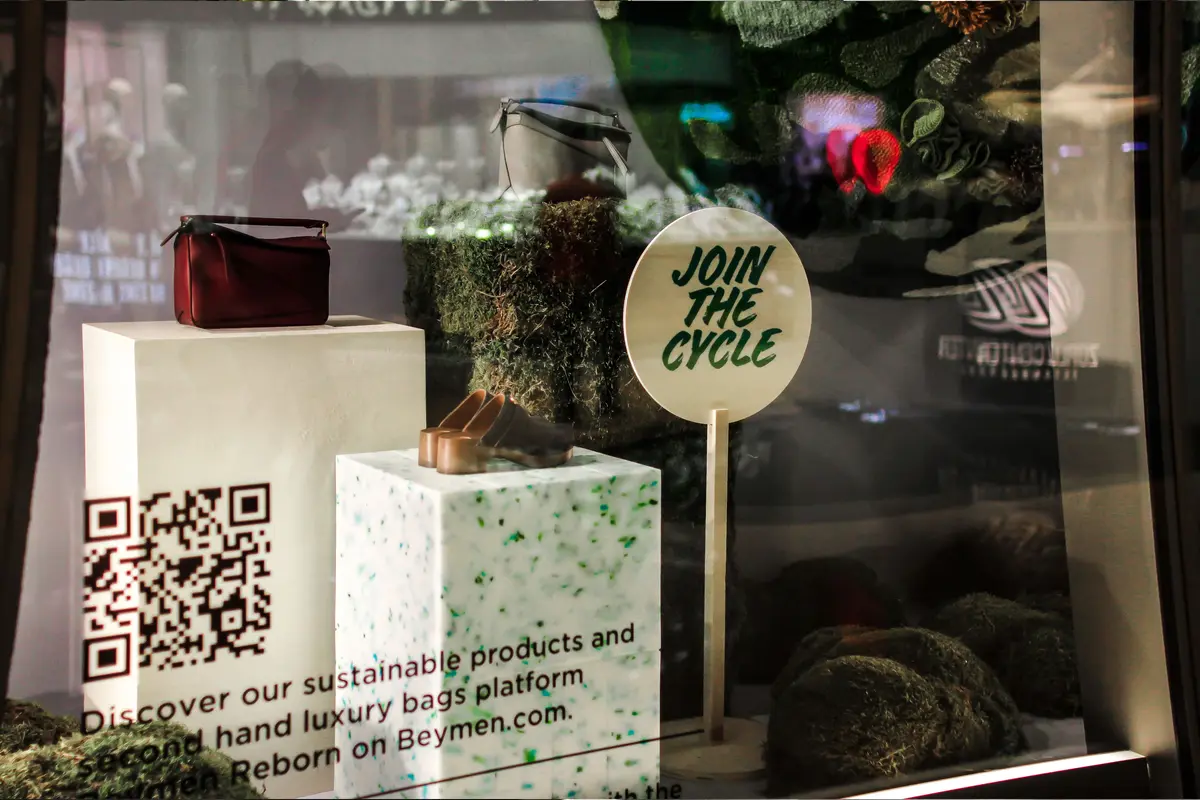
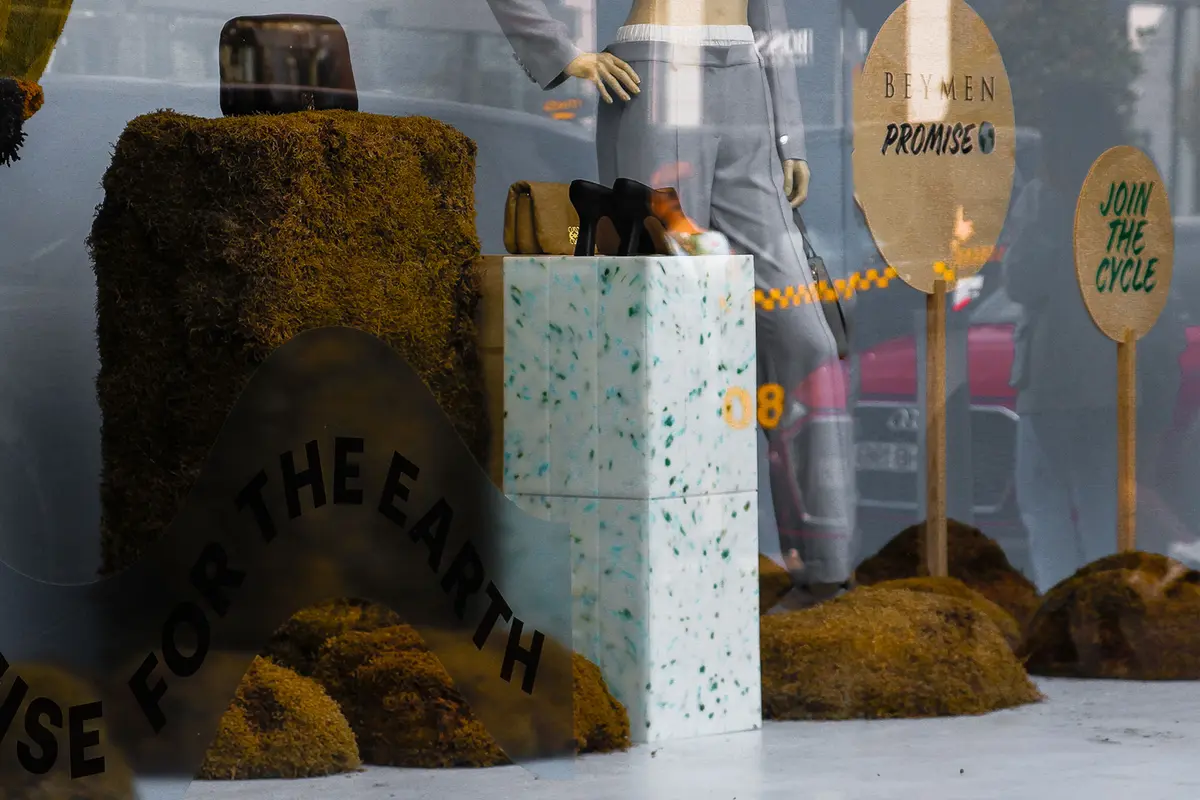
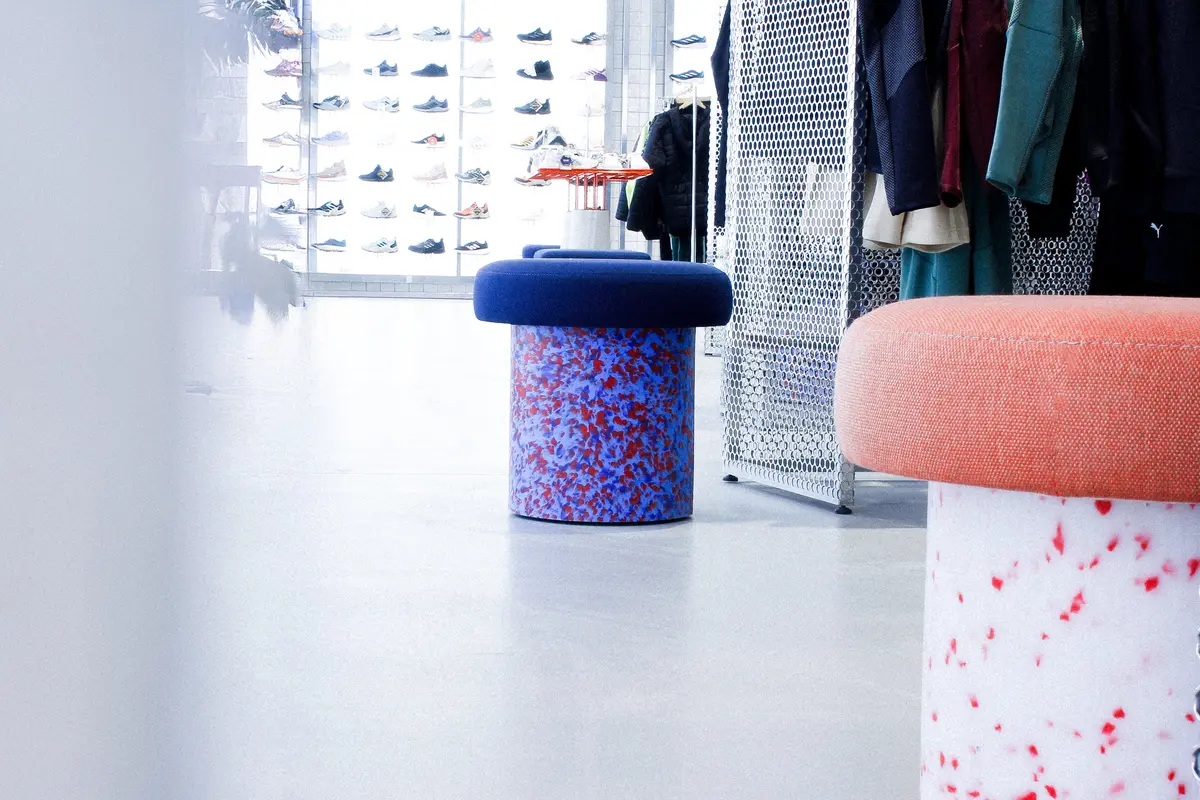
Beymen Promise Stands project converted 650 kg of plastic into panels. The in-store display system was built with a modular structure, designed as a reusable system between seasons.
Boyner İstinyePark project converted 300 kg of plastic into in-store displays and window elements. The surface texture was planned in neutral tones to align with Boyner's brand language.
Mercado Design Days project reinterpreted 500 kg of plastic as event architecture. After the event concluded, the panels returned to the studio and were set aside for use in new projects.
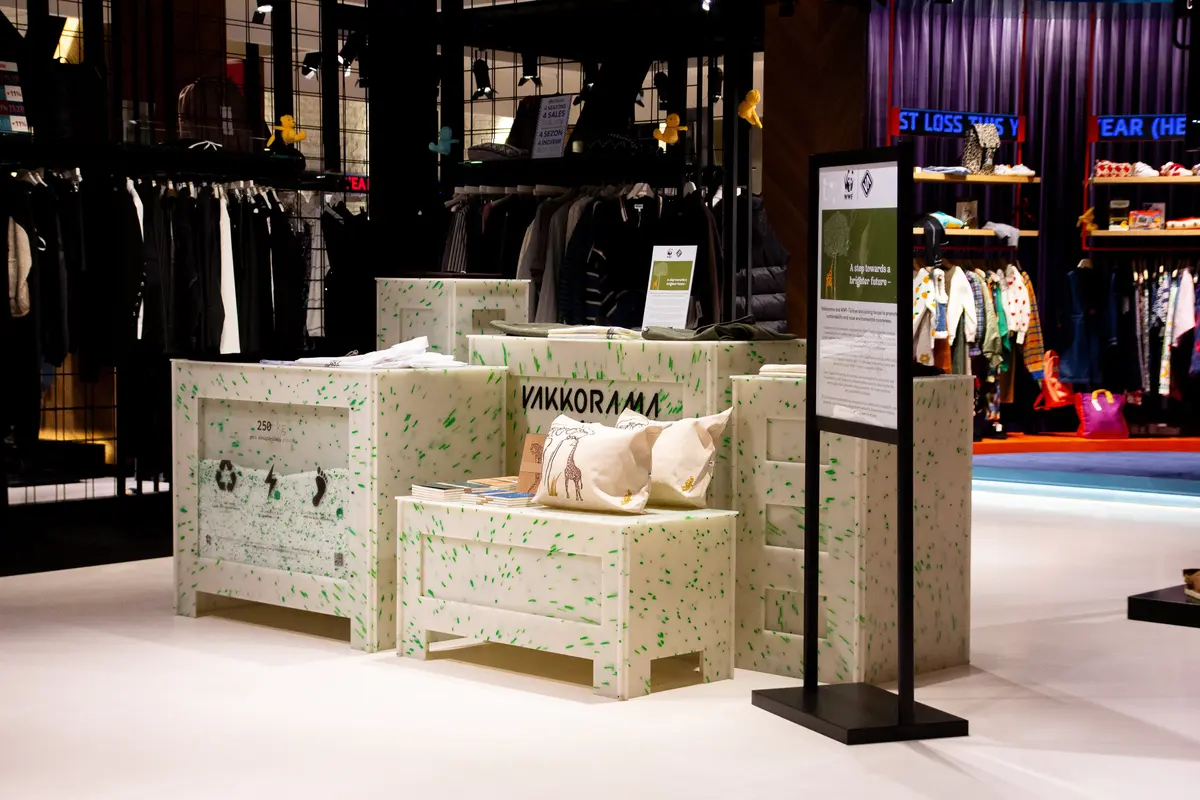
Vakkorama Akmerkez WWF Stands project formed the physical architecture of a sustainability campaign conducted in collaboration with WWF. The material was consistent with the message.
Sürdür Store Window Display project utilized 125 kg of plastic for a small-scale boutique window display.
Checklist for retail teams
If a window display is being planned with a new supplier, these seven points should be checked.
- What percentage of the material consists of recycled content
- Where does the material go after disassembly at the end of the season
- Does the manufacturer offer a buy-back program, and if so, under what conditions?
- Is the panel a single-material product, or does it contain coatings and adhesives?
- Is it a modular system, and is it reusable?
- Can the production process and carbon footprint be reported?
- Can sustainability metrics be documented at the end of the project?
Working with suppliers who can clearly answer these seven points creates direct value for ESG reporting and brand communication.
To get started
If you would like to explore the color and texture options of Blai Panel for your retail project, a sample kit is the most practical way to begin.
You can contact us directly for custom dimensions, colors, and application planning at the project scale. We develop tailored solutions for seasonal window displays, permanent store fixtures, and event architecture.
Let’s transform it together.
Frequently Asked Questions
Is the display material really bought back at the end of the season?
Yes. Studio Blai buy-back agreements are structured as part of retail projects. After dismantling, the panels are returned to the studio, melted down, and transformed into new panels.
Can the amount of plastic recycled in a window display project be documented?
Yes. Based on the number of panels used in each project, we calculate the amount of plastic recycled, energy saved, and CO₂ emissions reduced. This report can be used in the brand's sustainability communications.
Are bulk orders available for store-wide projects?
Yes. We offer mass production and custom color planning for multi-store chains. Projects for Beymen, Boyner, and Vakkorama were executed using this model.
Is Blai Panel durable enough for shelves and stands?
Yes. The HDPE panel is resistant to water, chemicals, and UV rays. It is suitable for high-traffic retail use and carries the EN 71-3 toy safety certification.

See the material in your hands.
Try Blai Panel colours and textures on your desk with the sample kit, or fill in the quote form for your project.


