


Sustainable Furniture for Hotels and Restaurants: Why and How
How to choose sustainable furniture for hotels and restaurants? The advantages of tables and benches made from recycled plastic.
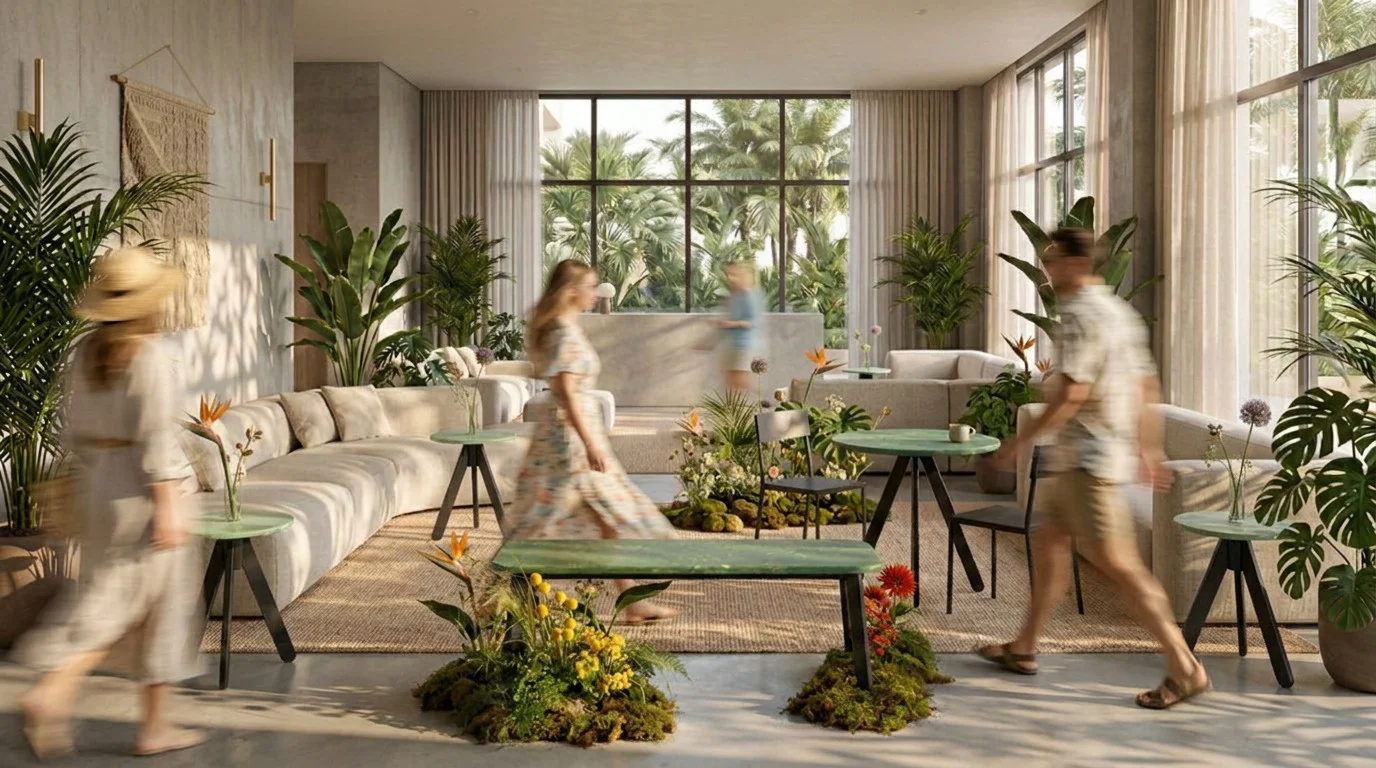
For hotel and restaurant operators, furniture is more than just a design choice. It is also an operating expense, a brand statement, and a stance on an increasingly important issue: sustainability.
Guests are now asking about this. In hotel reviews, notes about "furniture made from recycled materials" are appearing just as often as mentions of "they don't use plastic bottles." At the same time, there is a concrete reality for the operator: cheap furniture wears out in two years, while high-quality, well-designed furniture remains the same for a decade.
In this article, we will look at what sustainable furniture means for hotels and restaurants, why tables and benches made from recycled plastic are the right choice for this space, and what to look for when making a purchasing decision.
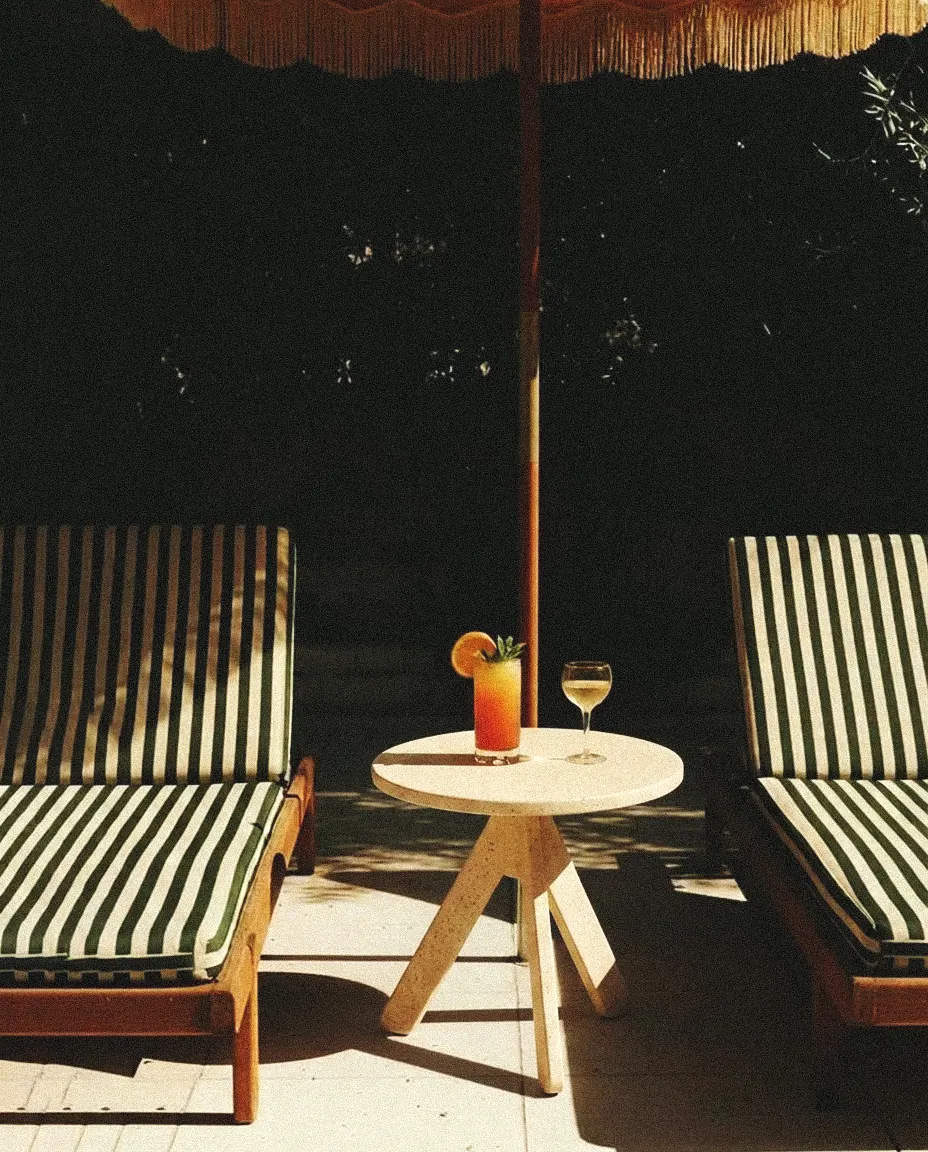
Why sustainable furniture is now a necessity
There are three reasons.
First: guest expectations have changed. Especially for boutique hotels and city restaurants, green certification or a sustainability narrative is now part of marketing. Even Booking.com highlights this with its "Travel Sustainable" badge. Furniture is the visible part of this story.
Second: the EU Ecodesign regulation will soon cover furniture as well. For businesses serving Europe, "repairability" and "recyclability" will become mandatory criteria in supplier selection. Businesses that adopt this early will have an advantage.
Third: the real cost calculation. Cheap furniture that needs replacing every three years ends up being more expensive than quality furniture used for five years. In high-traffic hotel and restaurant environments, this difference grows even further.
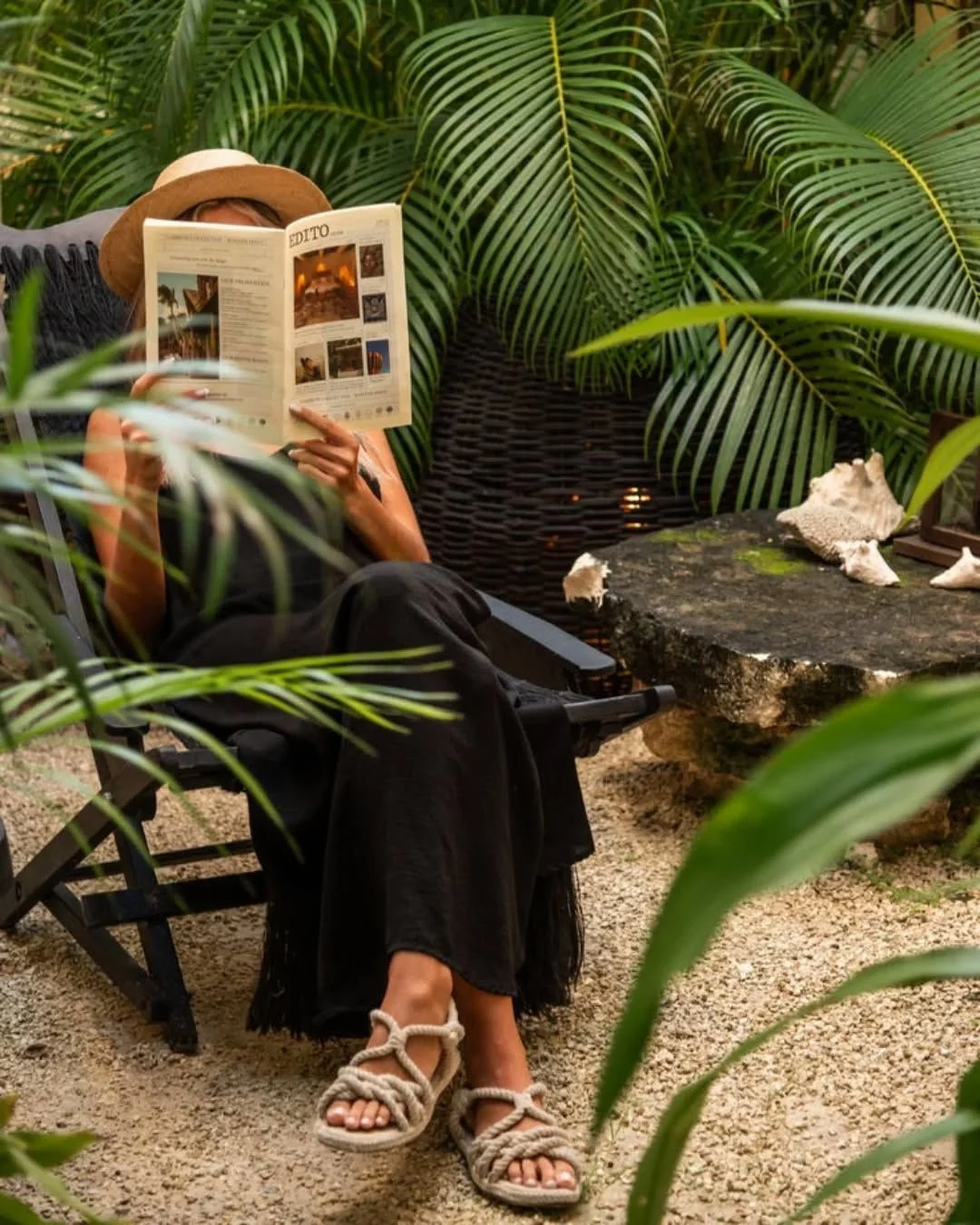
Four features to look for in hotel and restaurant furniture
Heavy commercial use is very different from home use. A guest might sit at a table once a day, but in a restaurant, that table is used twelve times a day. Therefore, furniture must pass these four tests.
Durability. Water, stains, hot plates, constant cleaning. The furniture should be unaffected by any of these.
Repairability. Something always breaks in a restaurant. You shouldn't have to throw away an entire bench just because one part is broken. A modular system can be renewed piece by piece.
Aesthetic consistency. You should be able to find the same color table five years later if you want to add one. That is why choosing a timeless palette, rather than trendy colors, is so important.
End-of-life solution. When it is time to replace the furniture, where does it go? To the landfill, to recycling, or does the manufacturer take it back? The answer to this question is the true test of sustainability.
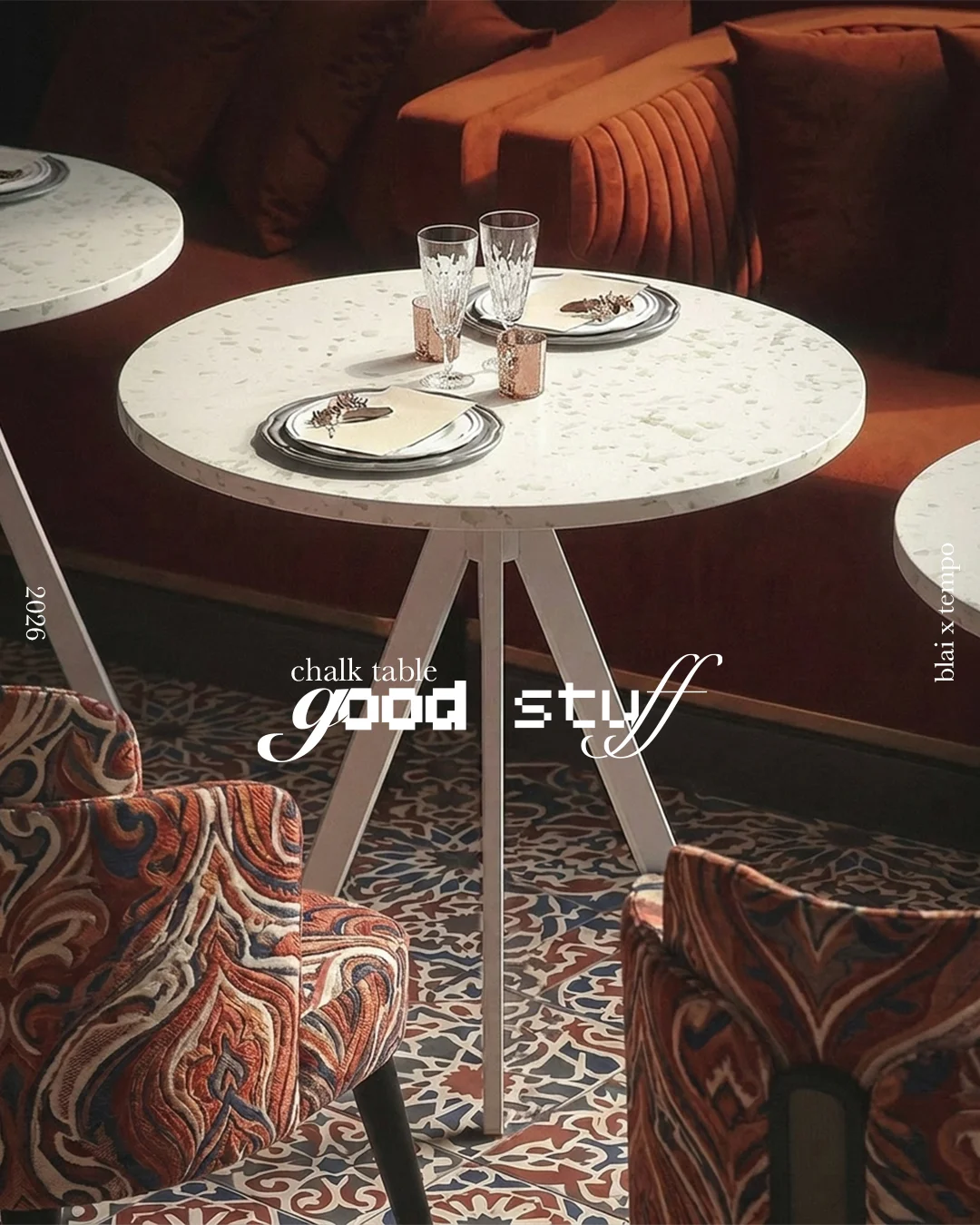
How recycled plastic passes these tests
HDPE plastic panels are a great candidate for hotel and restaurant environments. Let's look at the reasons one by one.
Water and chemical resistant. Coffee, wine, salad dressing, industrial cleaners; none of them leave a mark. It does not require the daily protective maintenance that wood does.
UV resistant. Colors do not fade in outdoor restaurants, on hotel terraces, or by the poolside.
Single-material structure. No glue, no lacquer, no veneer. The finish doesn't peel over the years because there is no finish.
Modular and repairable. In the Blai system, every part can be replaced individually. If the seat of a bench gets scratched, only that specific panel is replaced.
Take-back program. Studio Blai runs a take-back program. Products that have reached the end of their life return to the studio, where they are melted down and transformed back into panels.
Per panel 20 kg of recycled plastic is used, 370 kWh of energy saved and 26.5 kg CO₂ emission reduction is achieved. This figure creates a significant cumulative impact at the scale of a hotel or restaurant.
Choosing the right product for hotels and restaurants
The collection produced by Studio Blai in collaboration with Tempo is designed for commercial use.
- Round table (60 cm diameter) — breakfast room, cafe corner, bistro
- Square table (60 × 60 cm) — can be placed side-by-side for flexible layouts
- Bench (120 × 30 cm) — seating along restaurant walls, lobby
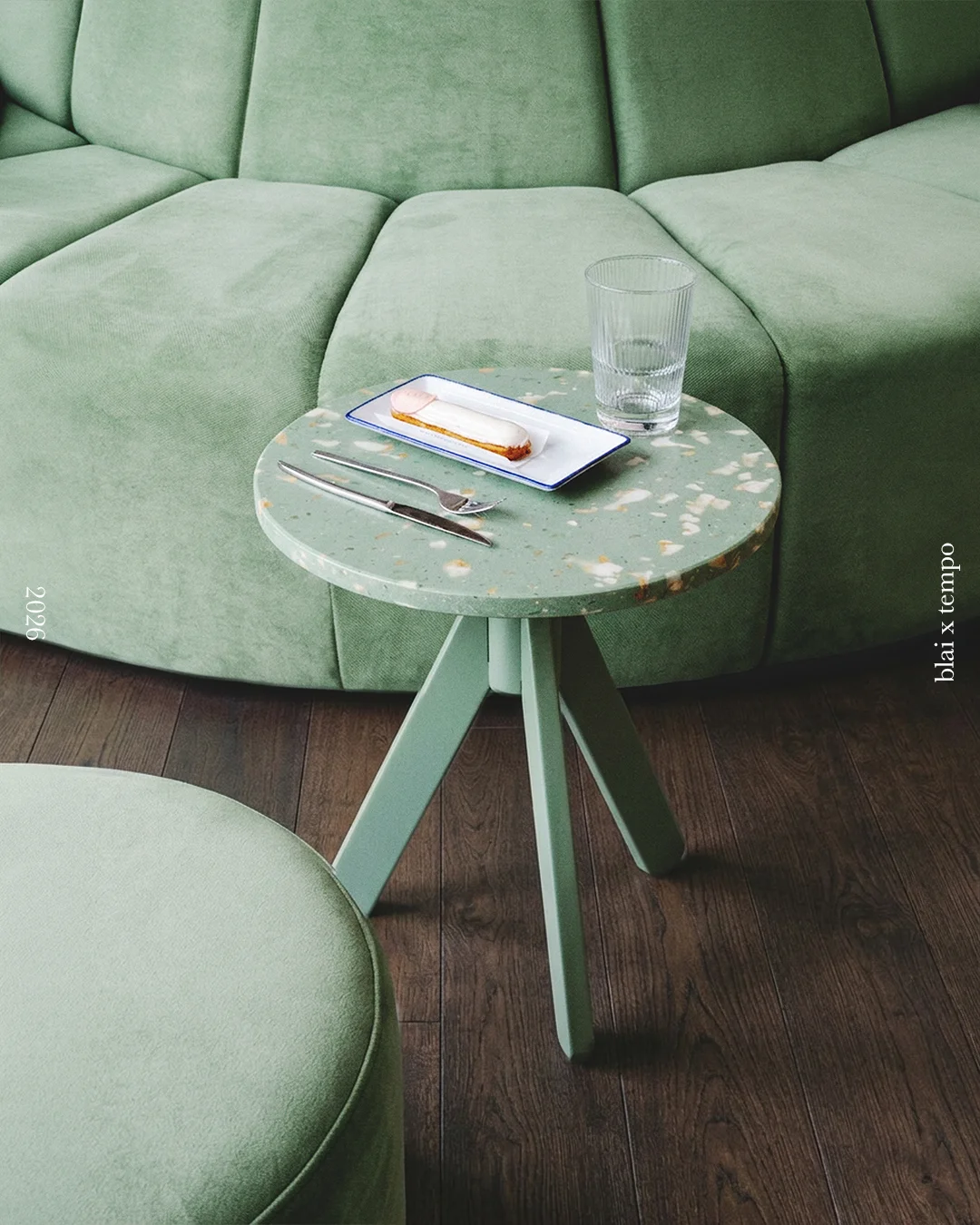
- Side table (30 cm diameter) — hotel room, next to lobby armchairs
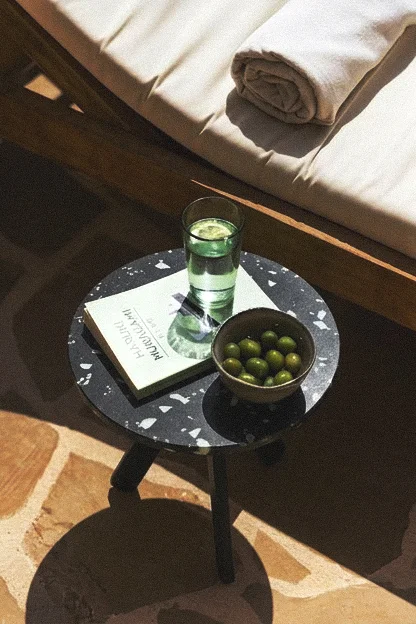
The colors are also curated for commercial spaces. Chalk is warm and neutral, fitting for hotel lobbies. Basalt is graphic and calm, well-suited for modern restaurants. Moss is for boutique concepts with natural accents. In addition to these, Terra, Sun, and Karma options are also available.
All products arrive flat-packed and can be assembled without tools. This offers a significant advantage in shipping and installation during hotel openings or restaurant renovations.
Three questions to ask when making a purchasing decision
Whether you are buying from Studio Blai or another brand, be sure to ask these three questions when purchasing sustainable furniture.
- What is the percentage of recycled material? "Eco-friendly" is a vague term. "100% recycled" is a clear commitment.
- Can it be repaired piece by piece? You shouldn't have to replace all your restaurant furniture just because a part of it has become unusable.
- Does the manufacturer offer a buy-back program? Brands without a buy-back program fall short on their sustainability claims.

To get started
The most practical way to choose the right color and texture for your space is to examine a sample set. Colors in images never truly reflect the actual texture.
If you would like to plan dimensions and colors for your hotel or restaurant project, you can contact us directly. Custom production is available depending on the scale of the project.
Let's transform it together.
See the material in your hands.
Try Blai Panel colours and textures on your desk with the sample kit, or fill in the quote form for your project.


